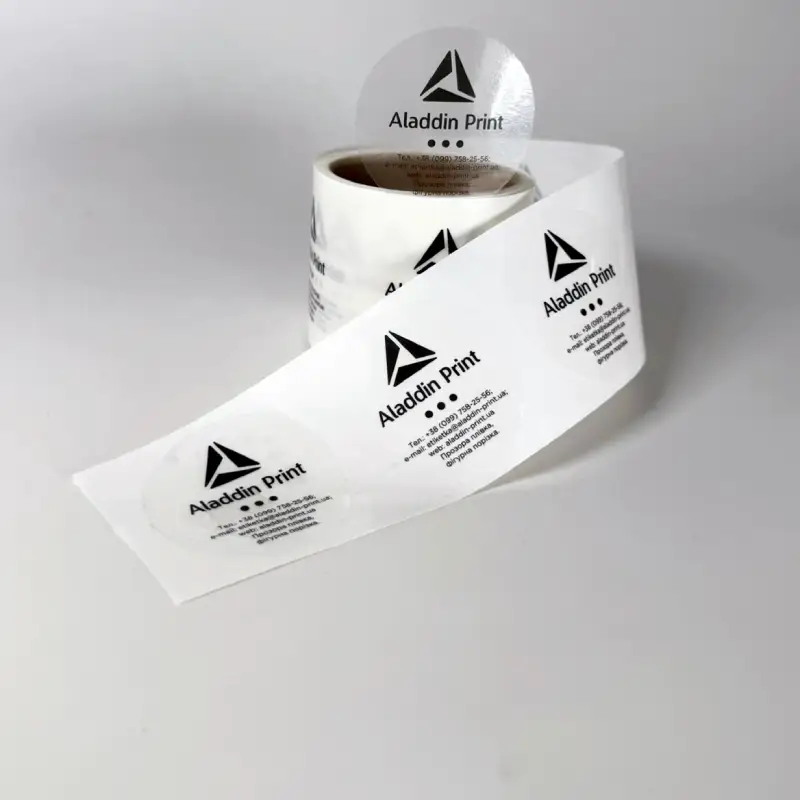
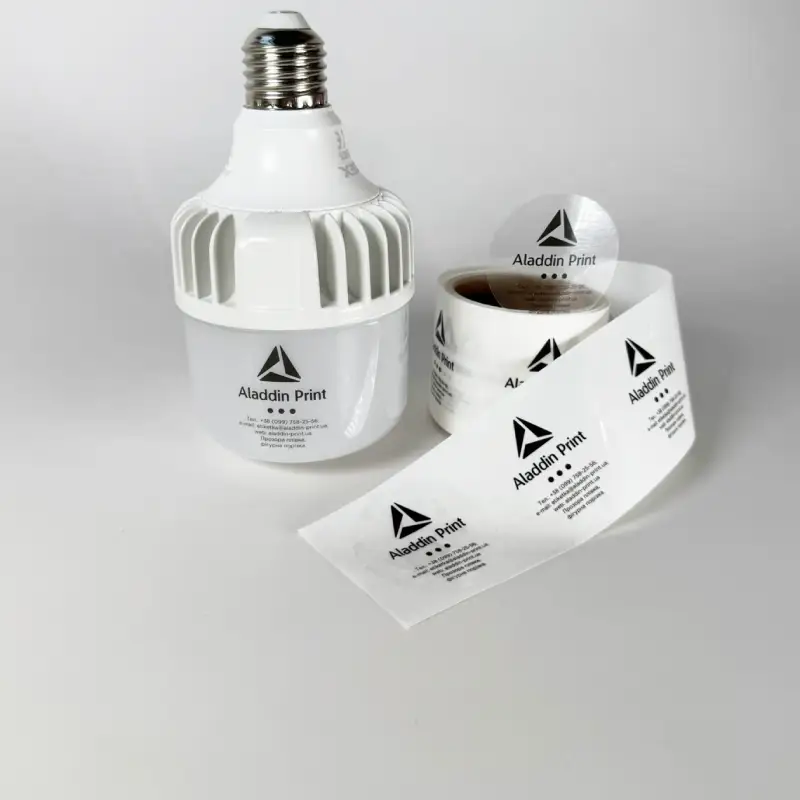
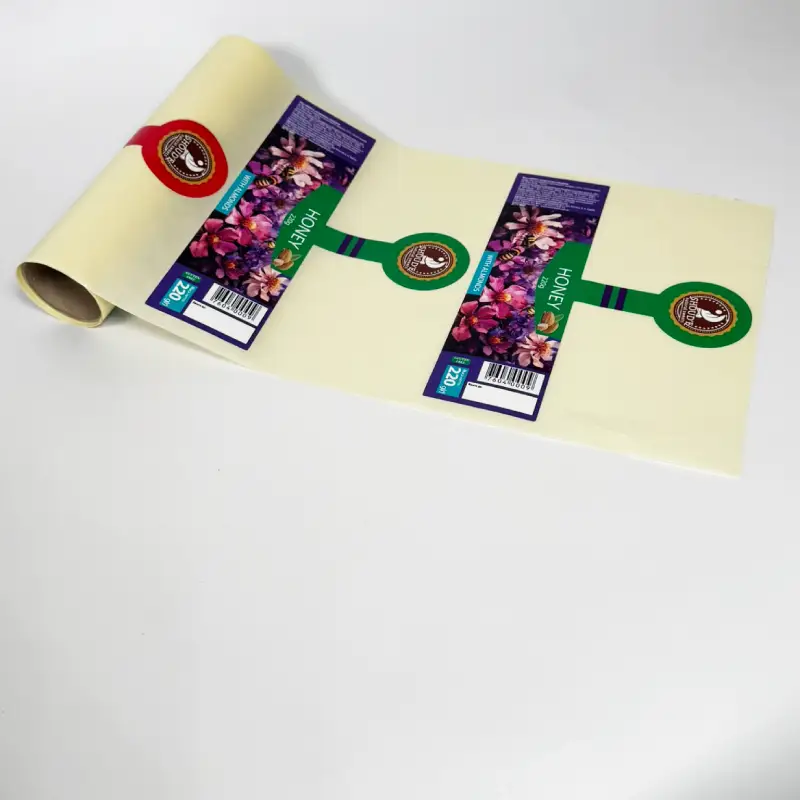
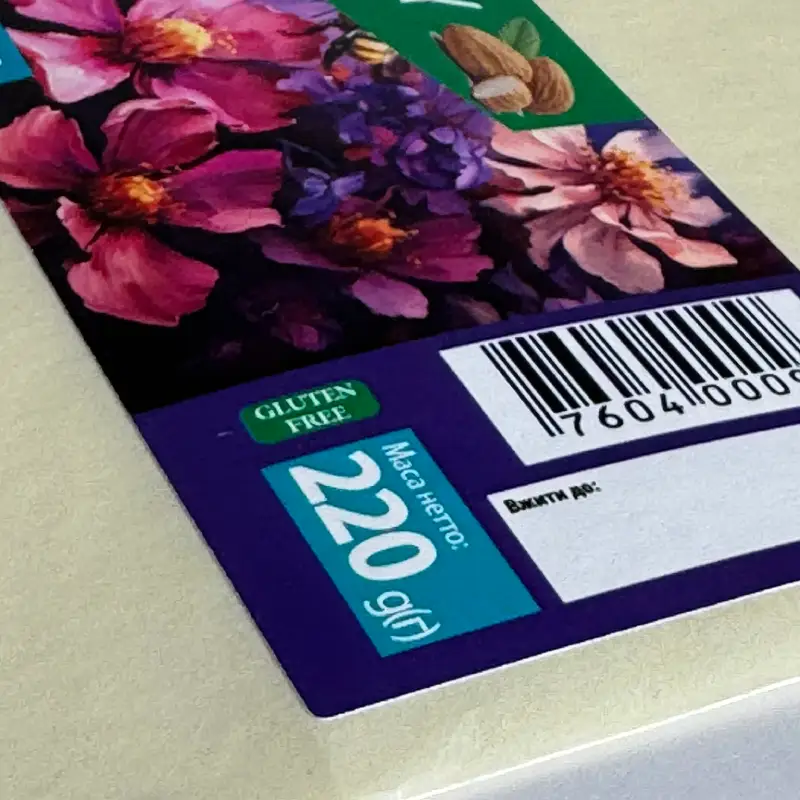
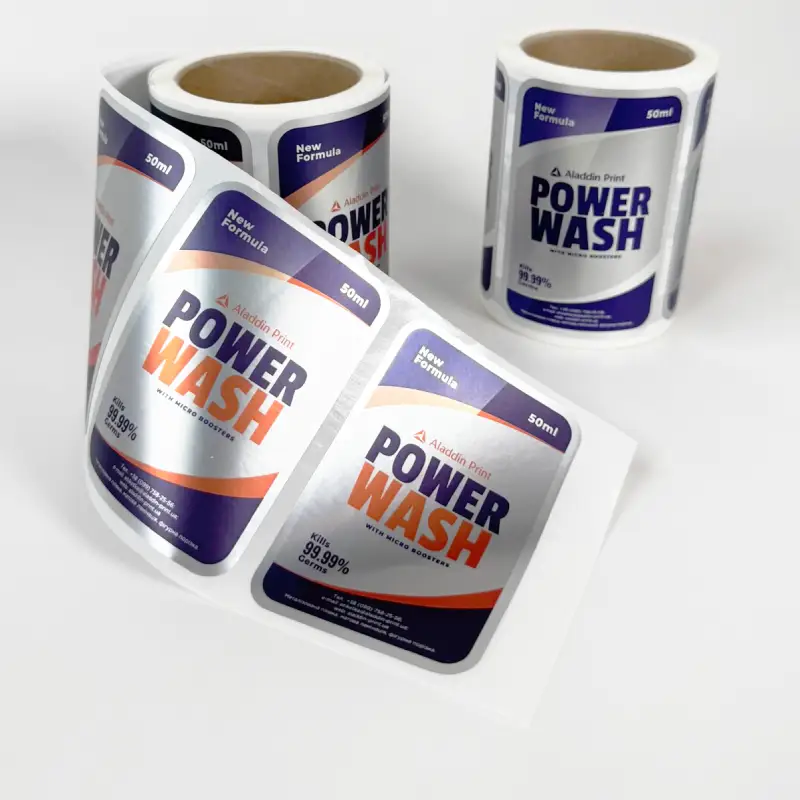
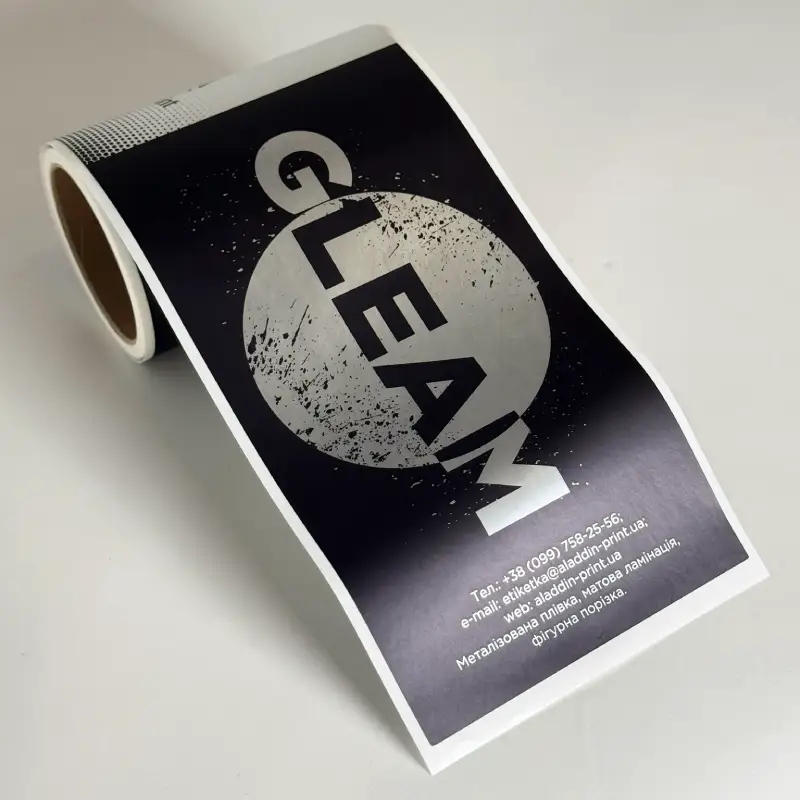
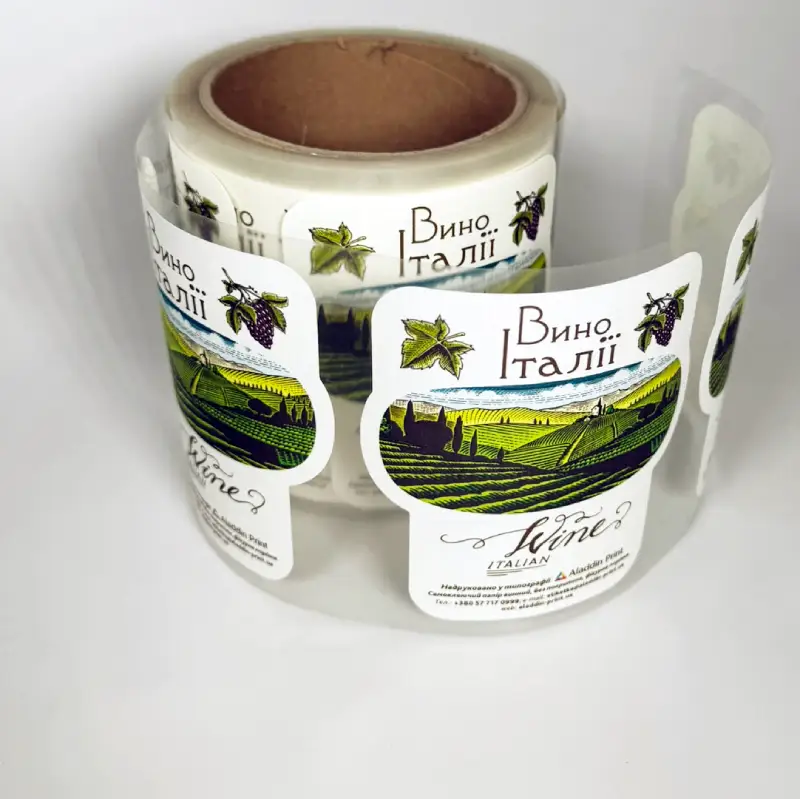
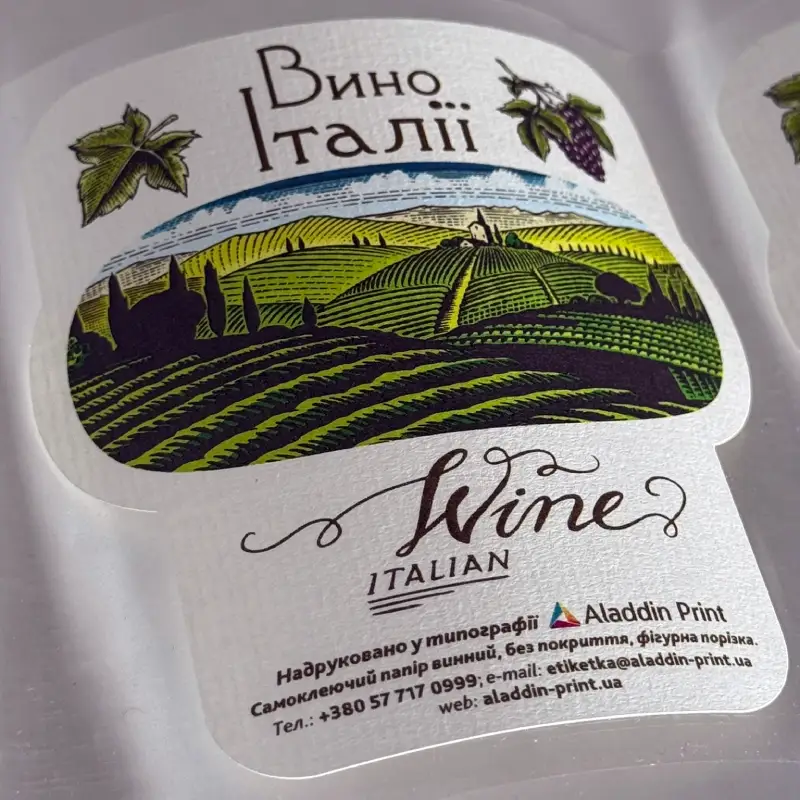
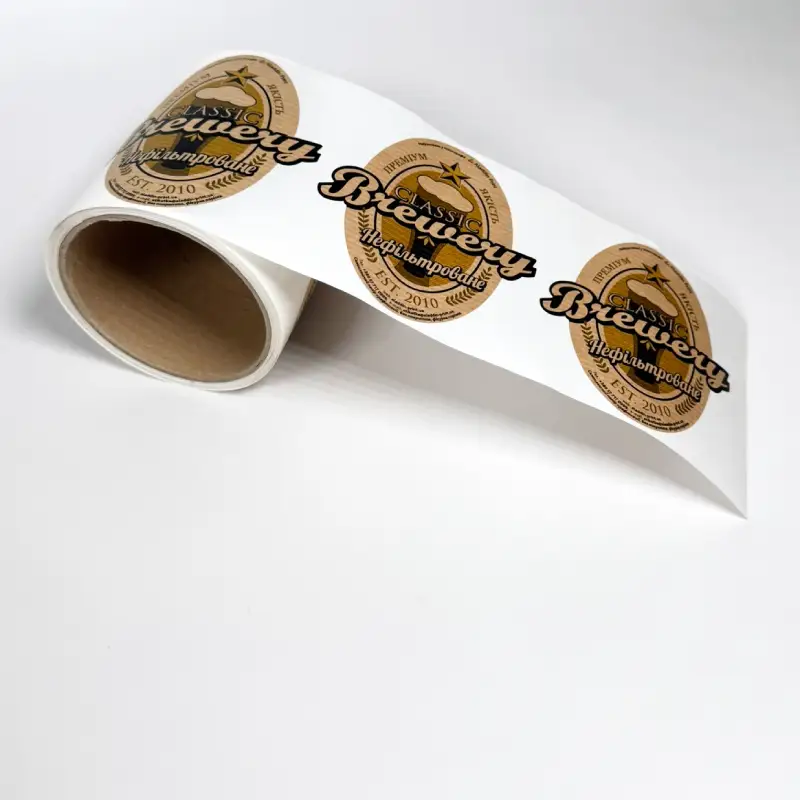
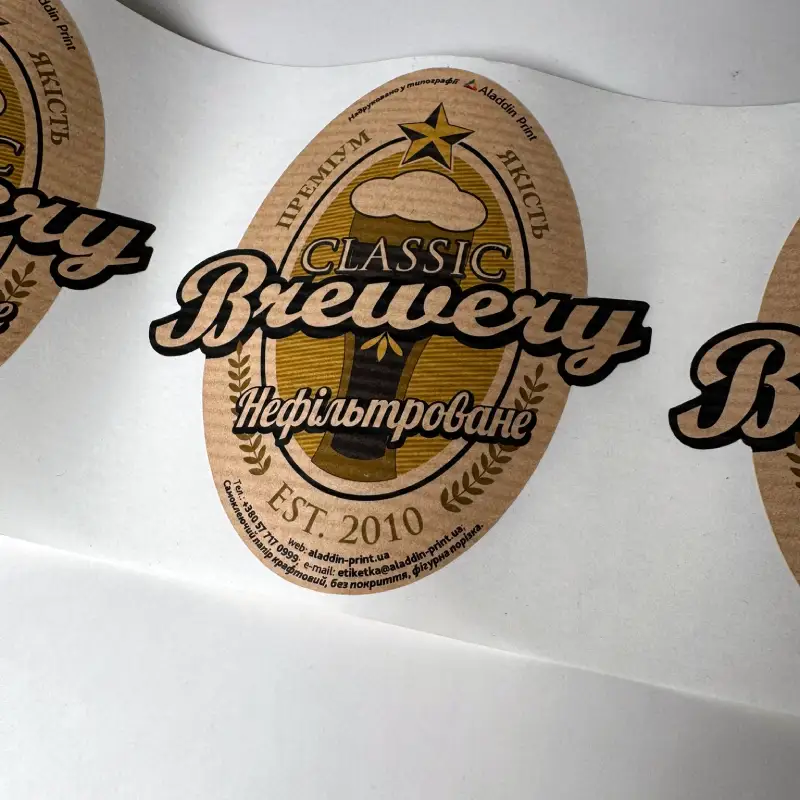
A label on white film in a roll is a practical marking solution that needs to stay on the packaging and look neat. White self-adhesive film works well for cosmetics, household chemicals, food products, and warehouse use: it resists moisture, tolerates abrasion better, and reproduces fine text, barcodes, and QR codes clearly. We can help you choose the adhesive, winding direction, and lamination for your conditions.
White film self-adhesive is the go-to option when the label must look clean, stay on the packaging, and not “run” from moisture. This material is suitable for both automatic and manual application and performs well in logistics, warehousing, and retail.
White film handles humid bathroom environments well: the label doesn’t soften, and it keeps contrast and readability longer. This matters for shampoos, shower gels, creams, and perfume bottles.
White film labels are suitable for products stored in refrigerators or shipped with temperature fluctuations: sauces, beverages, and frozen goods. With the right adhesive, the label holds reliably and still looks good even with condensation.
When labeling boxes and shipments, print clarity is critical: barcodes and text must remain scannable after transport and exposure to moisture. A film base helps maintain readability and label integrity.
Household chemicals, automotive chemicals, and cleaning products often come into contact with liquids. A white film label with lamination improves resistance to abrasion and accidental splashes.
Labels are used to mark parts, tools, kits, and boxes. Film provides durability in warehouse and production environments and doesn’t “flake” like paper under mechanical stress.
Bottles of wine, beer, soft drinks, or energy drinks are often chilled, which creates condensation. Film helps preserve the label’s appearance and the readability of information.
Labels are needed for packaging identification, warehouse marking, branding, and shipments. A film base withstands delivery to the customer better than paper, with fewer damages.
Square/rectangle/circle or die-cut shapes. The more complex the contour, the more important it is to prepare the artwork correctly.
To ensure a white film roll label fits your applicator or manual workflow, it’s important to agree on: winding direction, number of labels per roll, core diameter, and the roll’s outer diameter.
Digital roll label printing is convenient when you need test runs, frequent design updates, or many variants (SKUs). The roll format also makes personalization easy: series, dates, batches, QR-code labels, or barcodes.
Yes. A film base doesn’t absorb water, so the label keeps its appearance in humid environments better than paper. However, durability depends on two things: choosing the right adhesive for the surface (glass/plastic) and, if needed, adding lamination to protect against abrasion.
For cold conditions and condensation, you need a freezer (low-temperature) adhesive. It’s designed for application and storage in a fridge/freezer. Be sure to specify the temperature, whether condensation is expected, the packaging material (PP/PET/glass), and whether you apply the label onto a cold surface.
Yes. QR codes and barcodes can be printed on roll labels without issues. You can also add variable data such as series, batches, dates, SKU/article numbers, or numbering. We’ll agree on the data format and artwork so codes scan reliably (contrast, size, quiet zones/margins).
{ "@context": "https://schema.org", "@type": "FAQPage", "mainEntity": [ { "@type": "Question", "name": "Is a roll label on white film a water-resistant option?", "acceptedAnswer": { "@type": "Answer", "text": "Yes. A film base doesn’t absorb water, so the label holds up better in humid conditions than paper. However, durability depends on choosing the right adhesive for the surface (glass/plastic) and, if needed, adding lamination to protect against abrasion." } }, { "@type": "Question", "name": "Which adhesive should I choose for a refrigerator or freezer?", "acceptedAnswer": { "@type": "Answer", "text": "For cold conditions and condensation, you need a freezer (low-temperature) adhesive. It’s designed for application and storage in a fridge/freezer. Be sure to specify the temperature, whether condensation is expected, the packaging material (PP/PET/glass), and whether you apply labels onto a cold surface." } }, { "@type": "Question", "name": "Can you print QR/barcodes and variable data?", "acceptedAnswer": { "@type": "Answer", "text": "Yes. QR codes and barcodes can be printed on roll labels without issues. You can also add variable data such as series, batches, dates, SKU/article numbers, or numbering. We’ll align the data format and artwork so codes scan reliably (contrast, size, and required quiet zones)." } } ] }
To let us know you're not a robot, please provide the following answer: Завантаження...
To make sure you’re not a robot, please provide an answer: Loading...