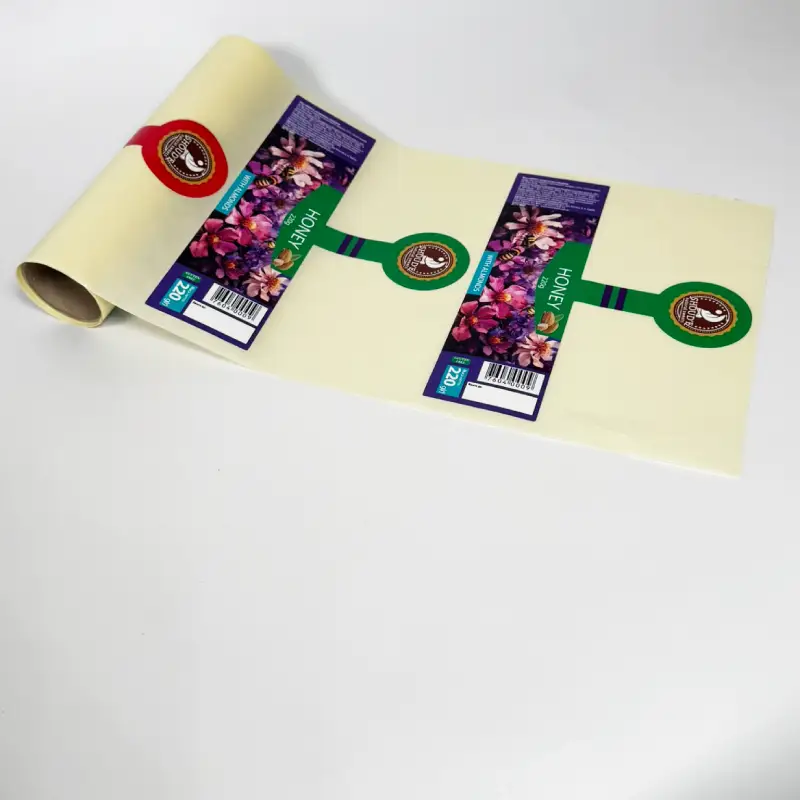
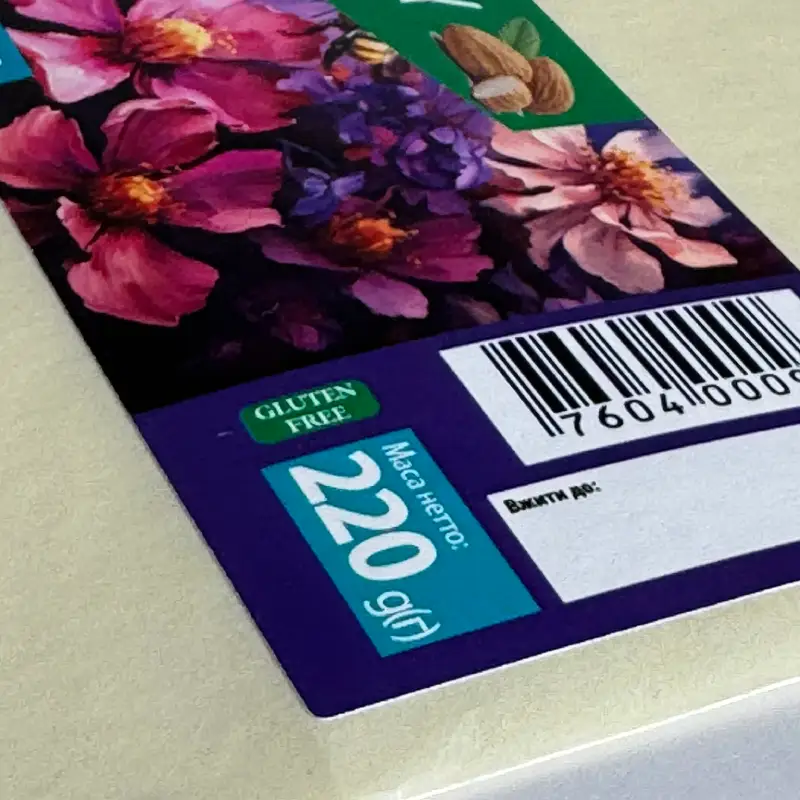
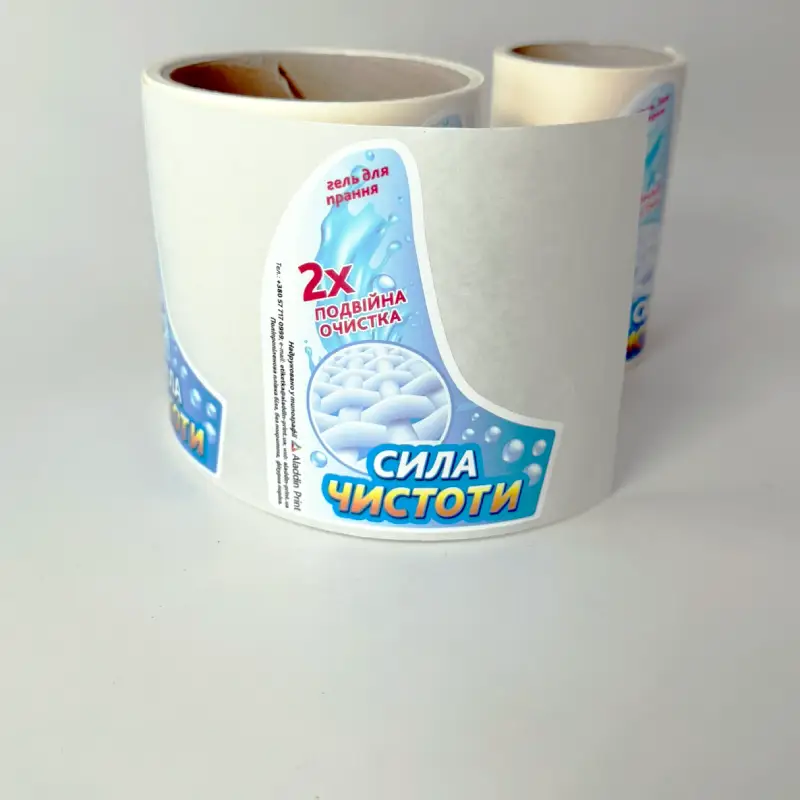
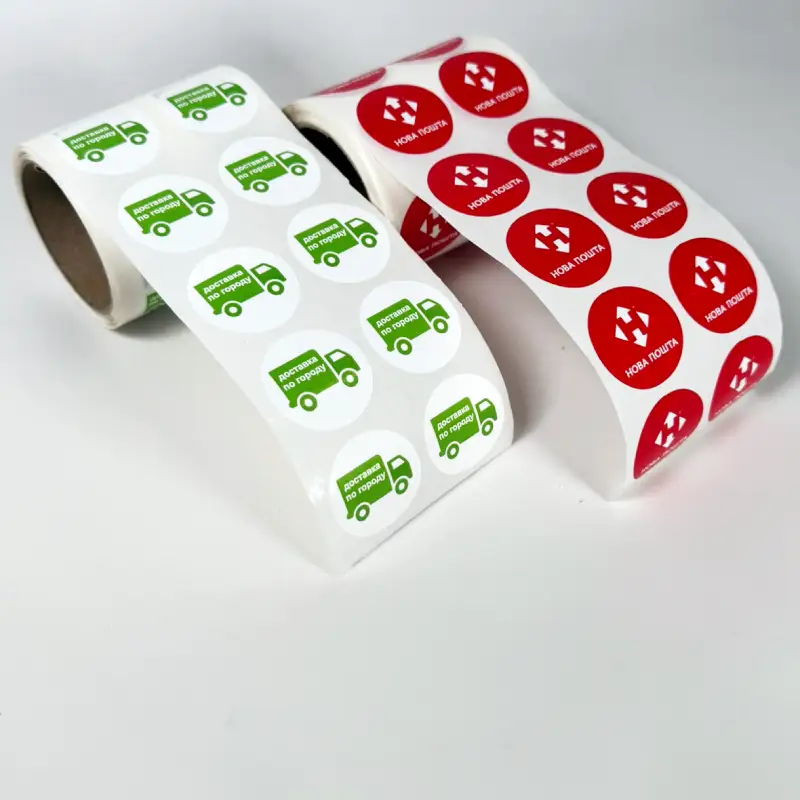
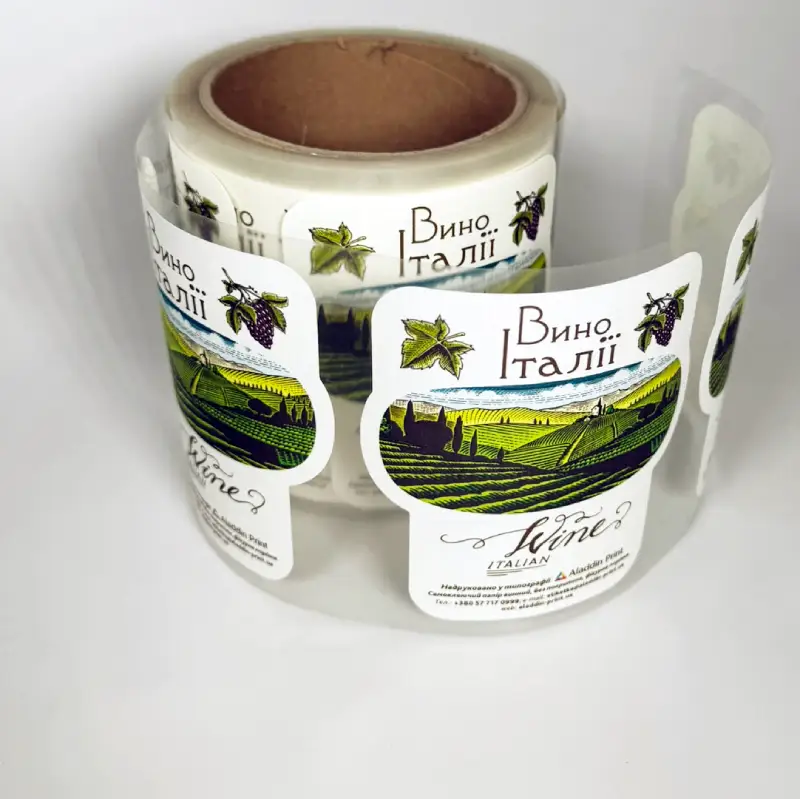
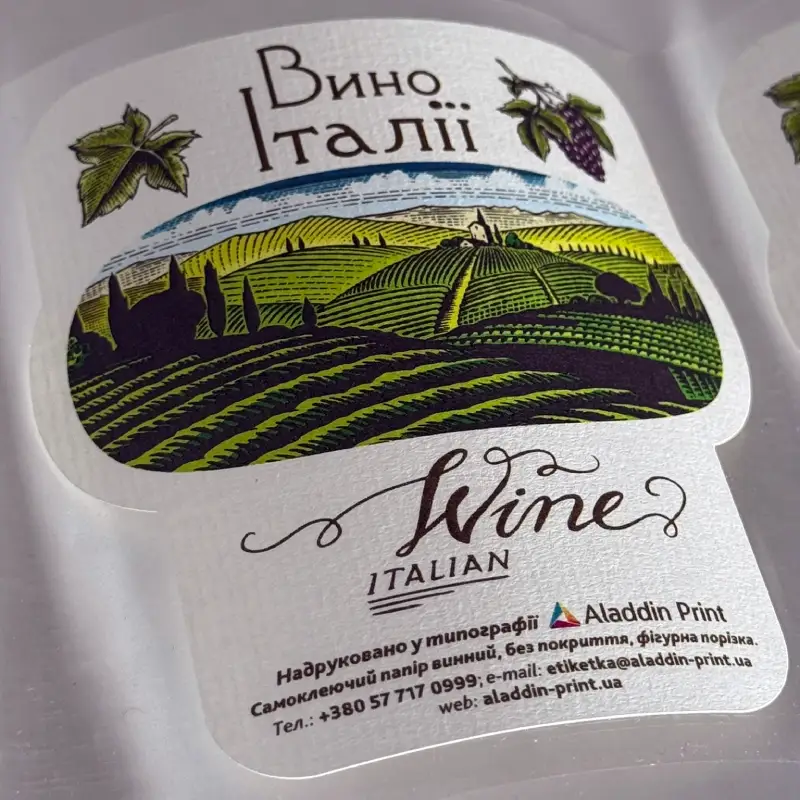
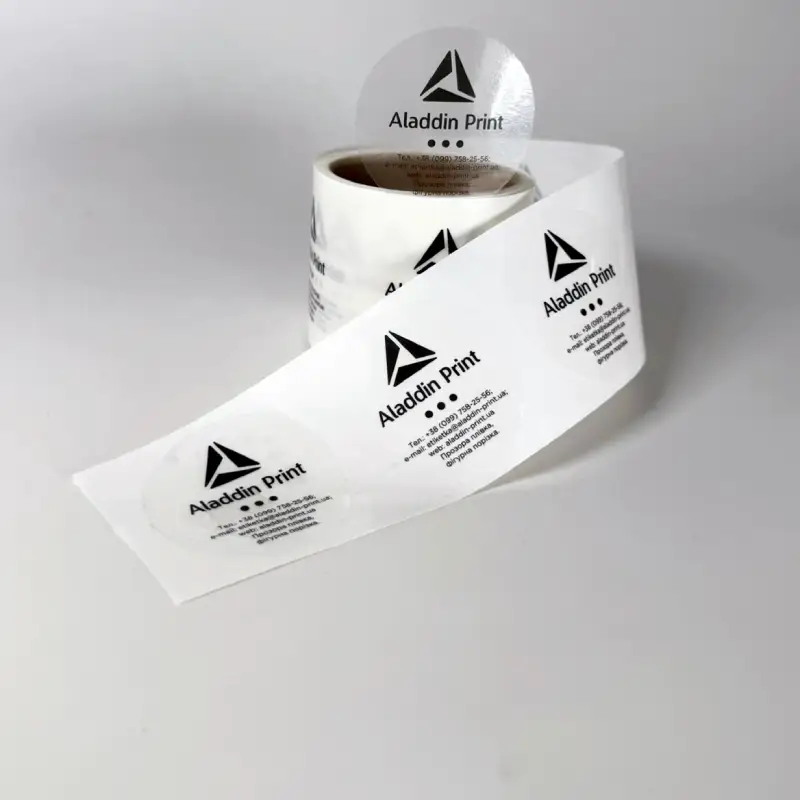
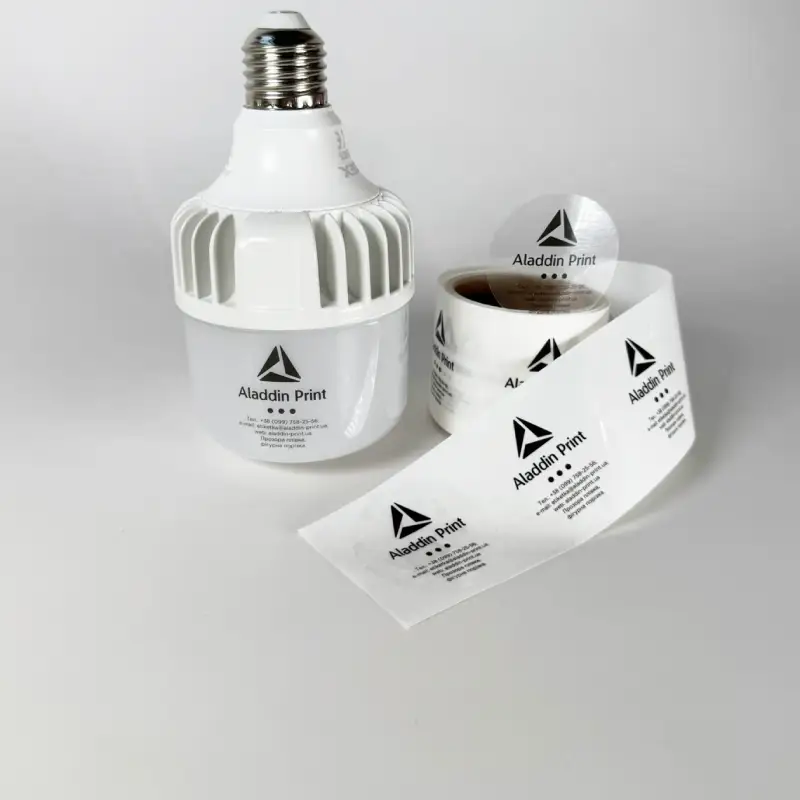
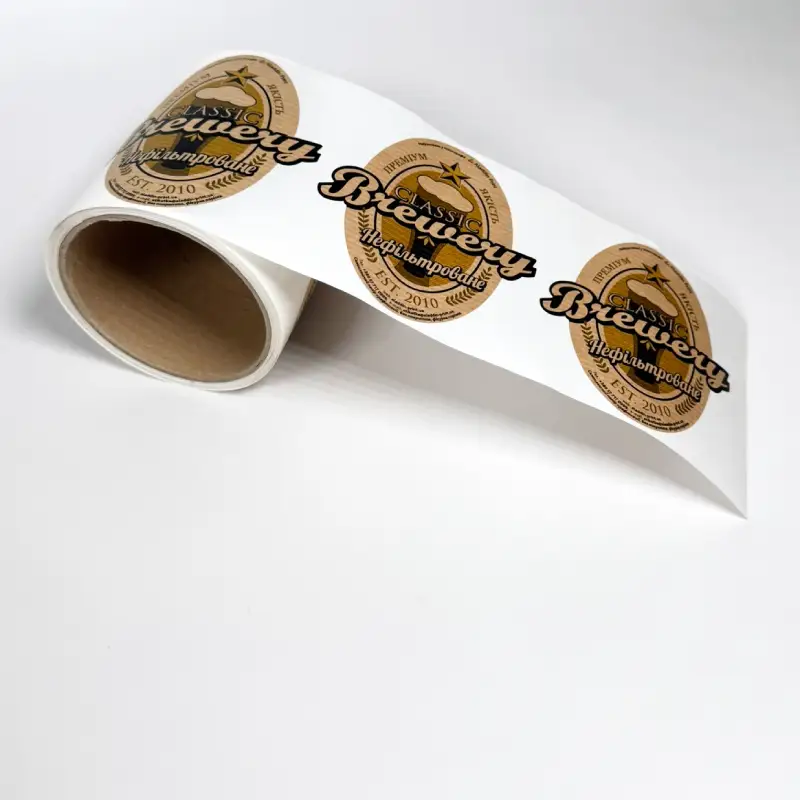
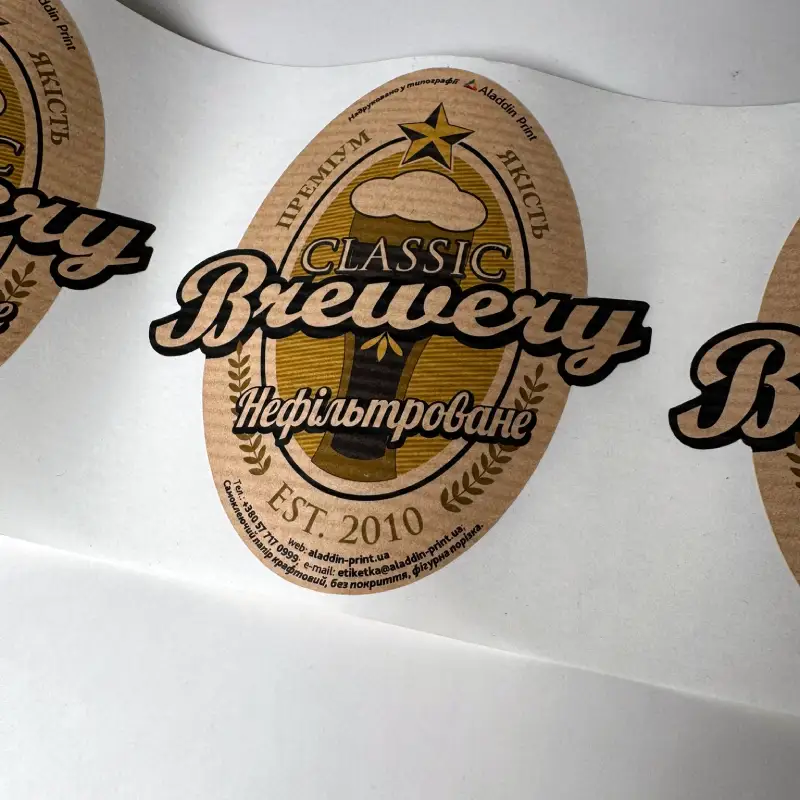
A label in a roll on silver film is the right choice when packaging needs a premium “metallic” accent while still staying practical: resistance to moisture, abrasion, and a neat look after transportation. Silver metallized film is often used for products that must compete on the shelf: it immediately draws attention and strengthens brand perception as modern and premium.
Most common use cases where silver film performs best:
Silver film is a material that creates a “metallic” effect ✨ without using additional foils. It gives products a modern, premium appearance while providing durability and moisture resistance.
Silver metallized film combines a “wow effect” with practicality. It looks great in fine design details and increases contrast. For many brands, it’s a way to make packaging look more premium without complex finishing technologies.
Key properties:
✨ “Metallic” effect — shiny, premium appearance.
💎 Modern and premium feel — ideal for brands that want to stand out.
🌧️ Moisture and abrasion resistance — labels keep their look even in demanding conditions.
⏳ Durability and strength — retain aesthetics throughout the product lifecycle.
🎨 Great print results — looks excellent in both full color 🌈 and black-and-white ⚫⚪ printing.
On silver film you can produce both minimalist designs (black/white printing) and full color. If the artwork includes light tones or you need “clean” colors unaffected by the metallized base, a white underprint is used (white ink under CMYK). This is especially important for pastel colors, skin tones, milky shades, and whenever accurate brand colors are required.
📏 Film thickness: 58 microns.
🧴 Adhesive: acrylic adhesive.
Post-print options:
Mandatory matte lamination.
Hot stamping with metallized foil in any color from our range.
⚠️ Important: silver film is always finished with matte lamination to protect the print and preserve the overall aesthetics.
For strong adhesion and to prevent label lifting at the edges, it’s important to consider the real use conditions: temperature, moisture, condensation, grease/oil, friction during logistics, and the substrate type (glass, plastic, cardboard, film).
Roll format is convenient both for automatic application (label applicator) and for manual labeling. For applicators, key parameters include winding direction, label orientation, core size, and the maximum outer roll diameter.
Technical capabilities for roll labels:
compatible with automatic applicators;
label orientation set to match your applicator;
convenient for manual product labeling;
one or multiple label designs on a single roll;
core diameters: 41.2 mm, 50.8 mm, and 76.6 mm.
Minimum order: Printing is done on a 30 cm wide roll web. The minimum order volume is 10 meters of roll length. After printing, the web is slit into the required lane widths for your labels.
Production time and delivery:
For orders in Kharkiv: same-day pickup may be possible (check with a manager; timing depends on production load).
For other cities: printing is done in Kharkiv, and delivery is handled by Nova Poshta.
To quickly calculate the price and start production, send your manager a short checklist:
Before placing an order, you can visit our demo room in Kharkiv or Kyiv. It includes all label material options — you can see the texture, feel it, and choose the best solution for your product.
Send your request to: druk@aladdin-print.ua
Use the chat on our website
Visit our offices:
Kharkiv, Donets-Zakharzhevskogo St. 6/8
Kyiv, Lesi Ukrainky Blvd. 23a
Call us:
+38 (057) 717-09-99
+38 (044) 334-41-17
+38 (098) 628-02-39
+38 (099) 758-25-56
+38 (063) 450-30-28
Yes, if your artwork includes light/pastel colors or you need accurate “clean” shades. A white underprint (white ink under CMYK) reduces the impact of the metallized base on color.
Yes, but application conditions matter: it’s best to apply the label onto a dry surface. If the label must hold reliably in demanding conditions (cold + moisture), tell your manager — we’ll recommend the best solution.
An acrylic adhesive is used by default, but the choice depends on the container material and conditions (moisture, grease, low temperatures). Send a photo of the packaging/material — we’ll advise.
The minimum order is 10 meters of roll length (printing on a 30 cm wide web, then slitting into the required lane width).
Ideally, PDF/AI with die-cut contours, bleed, and fonts converted to outlines. If you have fine details, a barcode, or a QR code, it’s better to send the file for a pre-check before printing.
✨ Wishing you great and useful print products!
{ "@context": "https://schema.org", "@type": "FAQPage", "mainEntity": [ { "@type": "Question", "name": "Do you need a white underprint on silver film?", "acceptedAnswer": { "@type": "Answer", "text": "Yes, if your artwork includes light or pastel colors, fine details, or you need accurate “clean” shades. A white underprint (white ink under CMYK) reduces the impact of the metallized base on color and makes results more predictable." } }, { "@type": "Question", "name": "Are labels on silver film suitable for cold bottles and condensation?", "acceptedAnswer": { "@type": "Answer", "text": "Yes, but application conditions matter: it’s best to apply onto a surface that is as dry as possible. If the label must hold reliably in cold and moisture, share the container material and storage conditions — we’ll recommend the best solution." } }, { "@type": "Question", "name": "Which adhesive is best for glass or plastic?", "acceptedAnswer": { "@type": "Answer", "text": "An acrylic adhesive is used by default, but the choice depends on the surface (glass, PET, PP, PE) as well as moisture, grease, and temperature. Send a photo of the container and describe the conditions — we’ll advise the most reliable option." } }, { "@type": "Question", "name": "What is the minimum order for labels in a roll on silver film?", "acceptedAnswer": { "@type": "Answer", "text": "The minimum order is 10 meters of roll length. Printing is done on a 30 cm wide web and then slit into the required lane widths for your labels." } }, { "@type": "Question", "name": "What are the artwork requirements for a label?", "acceptedAnswer": { "@type": "Answer", "text": "It’s best to provide artwork in PDF/AI with die-cut contours, bleed, and fonts converted to outlines. If there is a QR/barcode or fine details, it’s recommended to send the file for a pre-check before printing to avoid readability issues." } }, { "@type": "Question", "name": "Why does silver film need lamination?", "acceptedAnswer": { "@type": "Answer", "text": "Silver film is finished with matte lamination to protect the print from abrasion and moisture and to stabilize the overall appearance during use and transportation." } }, { "@type": "Question", "name": "What winding parameters are needed for an applicator?", "acceptedAnswer": { "@type": "Answer", "text": "For an applicator, the key parameters are winding direction, label orientation, core diameter (41.2 mm / 50.8 mm / 76.6 mm), and the desired outer roll diameter. If you’re unsure, send the applicator model or a photo of a sample roll — we’ll set up winding for your equipment." } } ] }
To let us know you're not a robot, please provide the following answer: Завантаження...
To make sure you’re not a robot, please provide an answer: Loading...