Handmade Cosmetic Labels: Paper, Film or Kraft
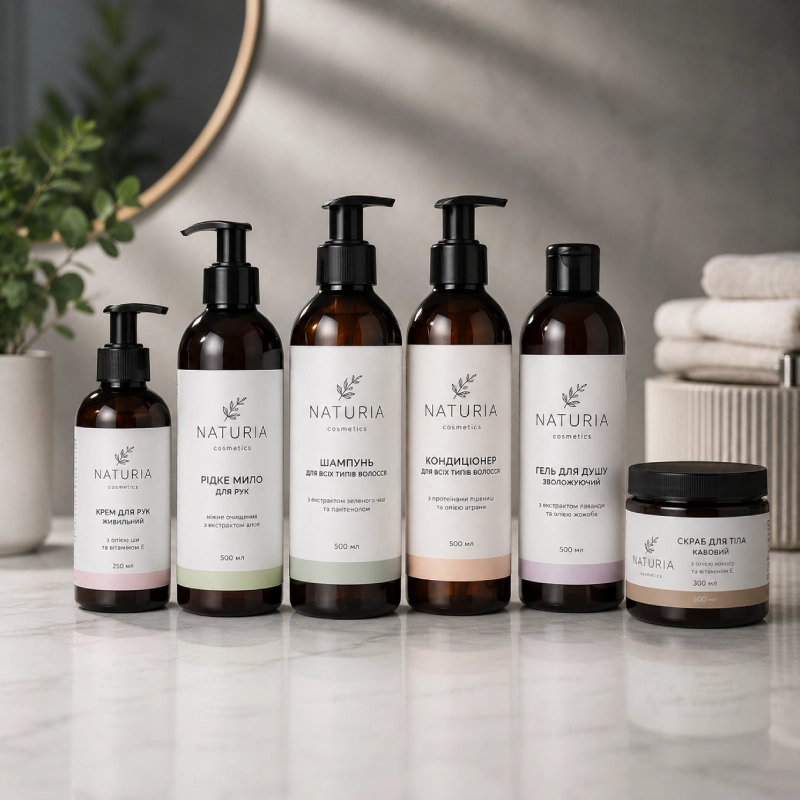
Labels for handmade cosmetics are best printed on white or clear film if the product comes into contact with water or oil: film does not soak through or absorb grease. Paper works for dry products and gift boxes, while kraft highlights a natural formula. The final choice depends on the container, storage conditions and the style of your brand.
Why label material matters more than it seems
Creams, scrubs, oils and balms live in the bathroom: wet hands, steam, drops of product on the jar. A paper label with an oil stain looks messy within a week, even if the product itself is excellent. For a handmade brand, the label is often the first contact with a customer, so it has to last the whole time the product is in use, not just for an Instagram photo.
Paper: when it is enough
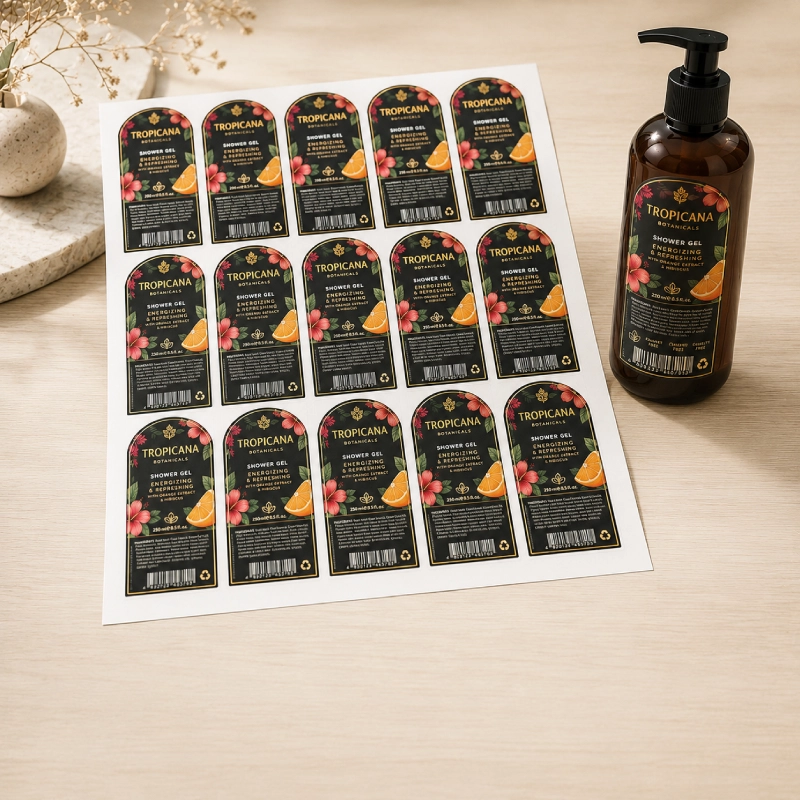
Self-adhesive paper reproduces colors well and suits products that are not exposed to moisture:
- bath bombs and bath salts in packaging;
- boxes and gift set packaging;
- sachets, envelopes, samples;
- seal stickers on lids.
If you want to keep paper but add protection, order lamination: a thin film applied over the print that protects against splashes and abrasion.
Film: for anything that meets water and oil
White film
A versatile material for creams, gels, shampoos and oils. It resists moisture and abrasion, comes in gloss or matte, and with soft touch lamination it feels velvety to the touch.
Clear film
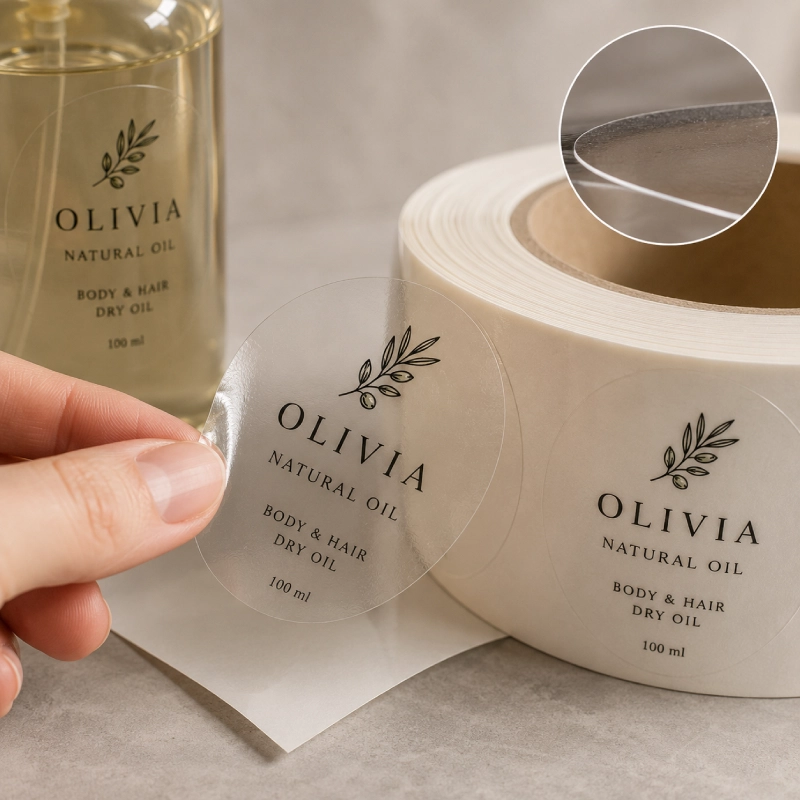
Creates a “no label” look: the text appears to be printed directly on the glass. One important detail: printing is done in CMYK without white ink, so light text on a dark bottle will be barely visible. The film withstands heat up to +70°C, which is handy if the jar is filled with a still-warm balm or candle wax.
Silver metallized film
A shiny base for perfumes and premium lines. It instantly makes a product stand out on a shelf full of paper labels.
Kraft: a natural brand image
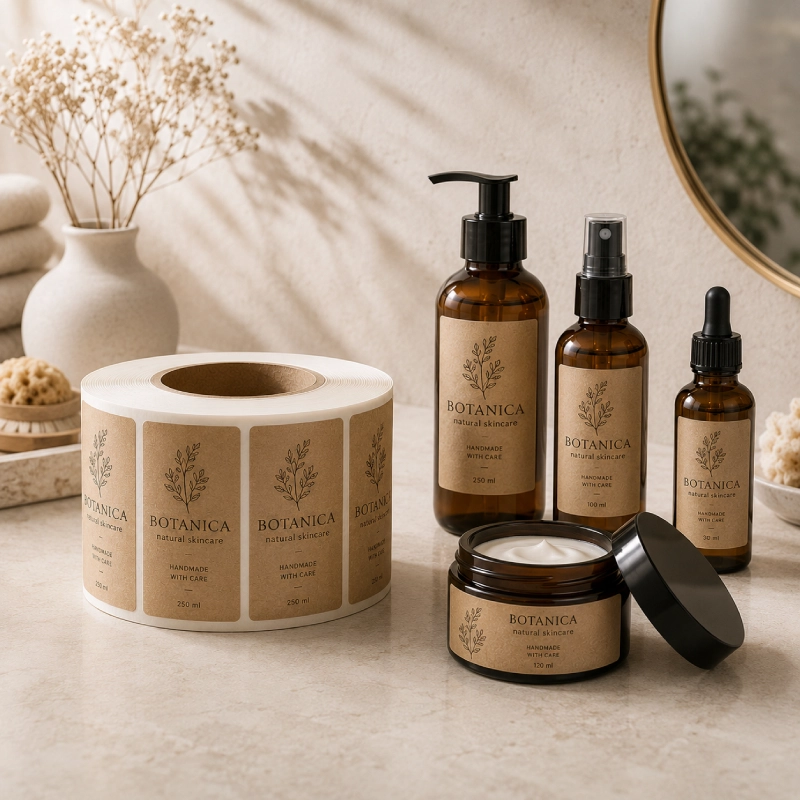
Kraft paper is associated with eco values, natural ingredients and handmade work, which is why soap, candle and solid deodorant makers love it. But keep its limits in mind: the base is brown, colors on it look muted, and thin light fonts get lost. Kraft absorbs moisture, so for a bottle that sits in the shower, film is the better choice.
Cosmetic label design: what to consider
- Size for the container. Measure the height and circumference of the jar and leave some margin so the label edges do not overlap.
- Required information. Product name, ingredients, volume or weight, shelf life, manufacturer contacts. Keep the ingredients text no smaller than 6 pt, otherwise nobody will read it.
- Margins. Do not place text right at the edge, and extend the background 2 mm past the trim line (this is called “bleed”) so no white strip appears after cutting.
- Contrast. Check how the design looks on your actual material: colors change on kraft and clear film.
The most reliable way to test your cosmetic label design is to print a test batch, apply it to the real container and use it for a few days.
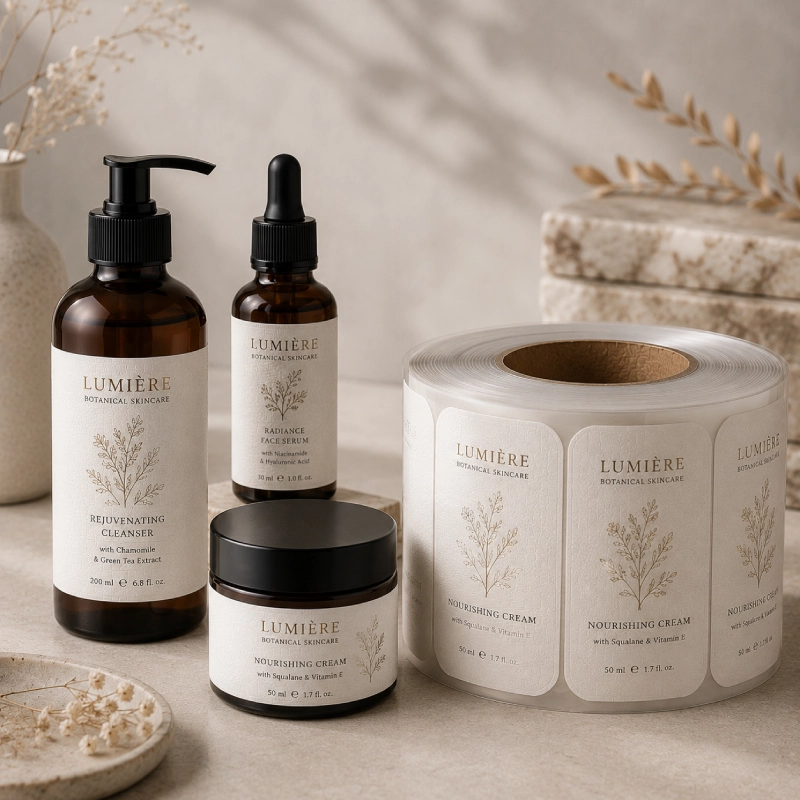
Sheets or rolls
At the start, it is easier to order sheet labels: a 320×450 mm print area, any shape thanks to contour cutting, and urgent orders from 30 minutes. This makes it easy to test several designs or materials at once.
Once your volume grows to about 20 A3 sheets per order, it makes more sense to switch to roll labels: from 10 linear meters, production from 1 business day, easy to apply by hand or with a machine. See other formats in the stickers section.
Aladdin Print has been in business since 2007. We will help you choose the right material for your container and prepare your artwork for printing.
Frequently asked questions
Which cosmetic label is resistant to water and oil?
White or clear film. It does not soak through, does not absorb grease and resists abrasion. Paper can be laminated, but for products kept in the shower, film is more reliable.
Can I order a small batch of labels for handmade cosmetics?
Yes, sheet labels are printed in small batches. This is a convenient way to test the design and material on the real container before ordering the main run.
Is kraft suitable for cosmetics used in the bathroom?
Kraft absorbs moisture, so it is better for packaged soap, candles and dry products. For shampoo or gel bottles, choose film.